As organizations move toward AI-driven operations, many discover that the biggest constraint isn’t algorithms or models, it’s infrastructure.
AI workloads demand consistency, scalability, and simplicity across compute, storage, and networking. When legacy architectures struggle to keep up, hyperconverged compute is often the missing layer that enables AI initiatives to move from experimentation to production.
1. Your Infrastructure Is Fragmented and Hard to Scale

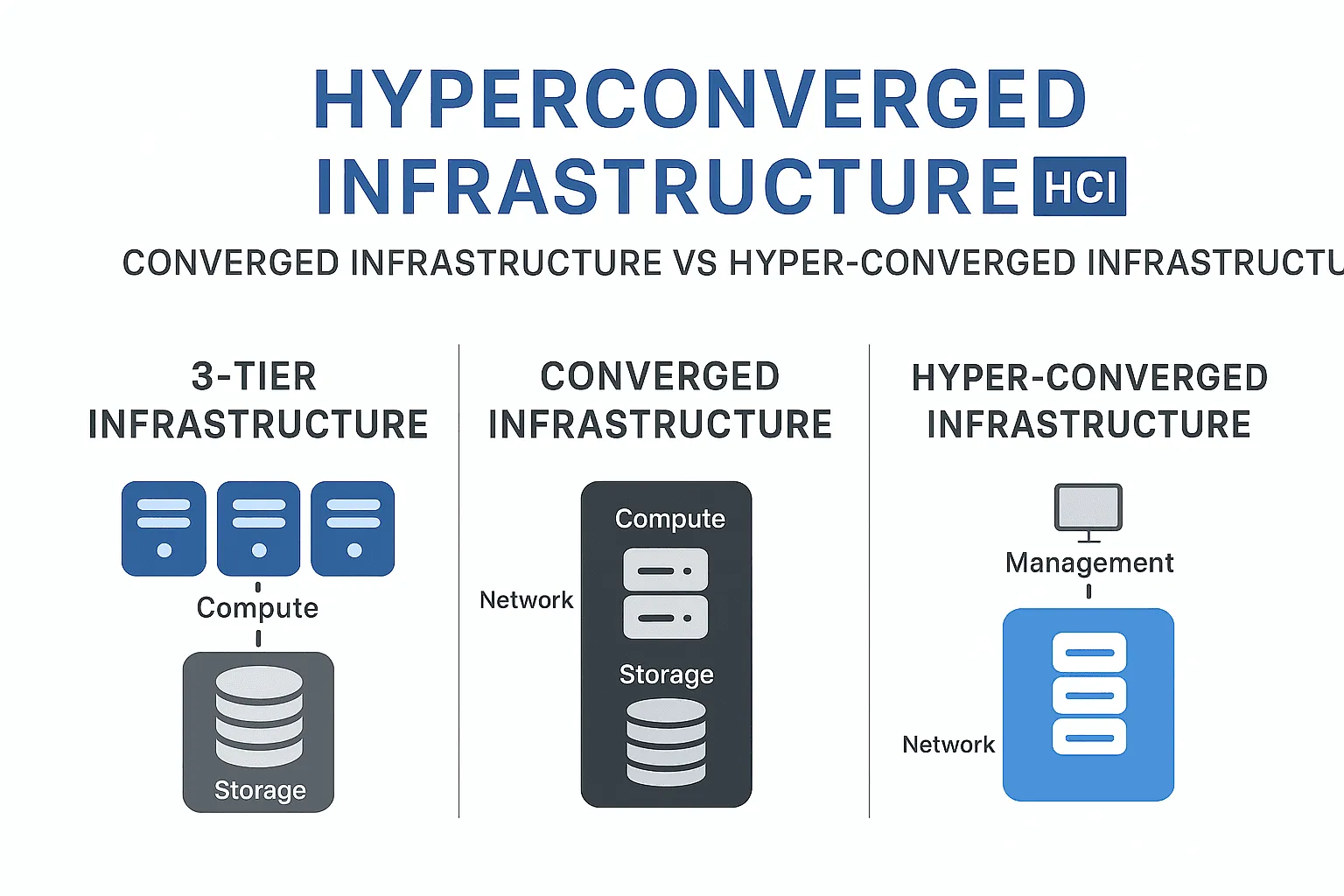
Traditional infrastructure often separates compute, storage, and networking into distinct systems. While this model worked for predictable workloads, it becomes difficult to manage as AI-driven use cases expand.
Common challenges include:
-
Complex dependencies between hardware layers
-
Slow provisioning when new workloads are introduced
-
Manual coordination across multiple systems and vendors
Hyperconverged compute consolidates these layers into a single, software-defined platform. As outlined by Origen, this approach simplifies scaling by allowing organizations to expand capacity incrementally, adding nodes without redesigning the entire environment.
The result is faster deployment and fewer operational bottlenecks.
2. Performance Becomes Unpredictable Under AI Workloads
AI and data-intensive applications place uneven demands on infrastructure. Spikes in compute usage, storage access, or network traffic can expose weaknesses in traditional setups, leading to inconsistent performance.
Signs this may be affecting your environment include:
-
Resource contention between workloads
-
Difficulty prioritizing critical applications
-
Limited visibility into performance at the infrastructure level
Hyperconverged compute addresses this by unifying resource management. Compute, storage, and networking are orchestrated together, making it easier to allocate resources where they are needed most.
This consistency is especially important when supporting AI-driven systems alongside core platforms such as PBX and business applications.
3. Operations and Reliability
As infrastructure grows more complex, operational risk increases. Each additional system introduces new points of failure, monitoring tools, and maintenance requirements, making reliability harder to maintain.
Hyperconverged architectures help reduce this complexity by:
-
Centralizing management into a single control plane
-
Reducing hardware sprawl and integration points
-
Supporting built-in redundancy and fault tolerance
For organizations running always-on services, such as PBX-based communication platforms, this simplicity translates directly into higher availability. Fewer dependencies mean fewer disruptions and more predictable operations as AI workloads are introduced.